
How We Built a Conversion Asset for Chariot Safaris
Turning One Client Win Into a Lead Machine: How We Built a Conversion Asset for Chariot Safaris
Most businesses sit on their best marketing material without realising it. A successful project, a happy client, a job done well; these are proof, and proof is the most persuasive thing you can put in front of a prospect. Yet for most companies that proof stays buried in an inbox or a WhatsApp thread, never doing any work.
At KaziBora Digital, turning that buried proof into a working asset is a big part of what we do. Here’s exactly how we did it for Chariot Safaris so you can see the thinking behind the service, not just the result.
The starting point: a report nobody would ever read
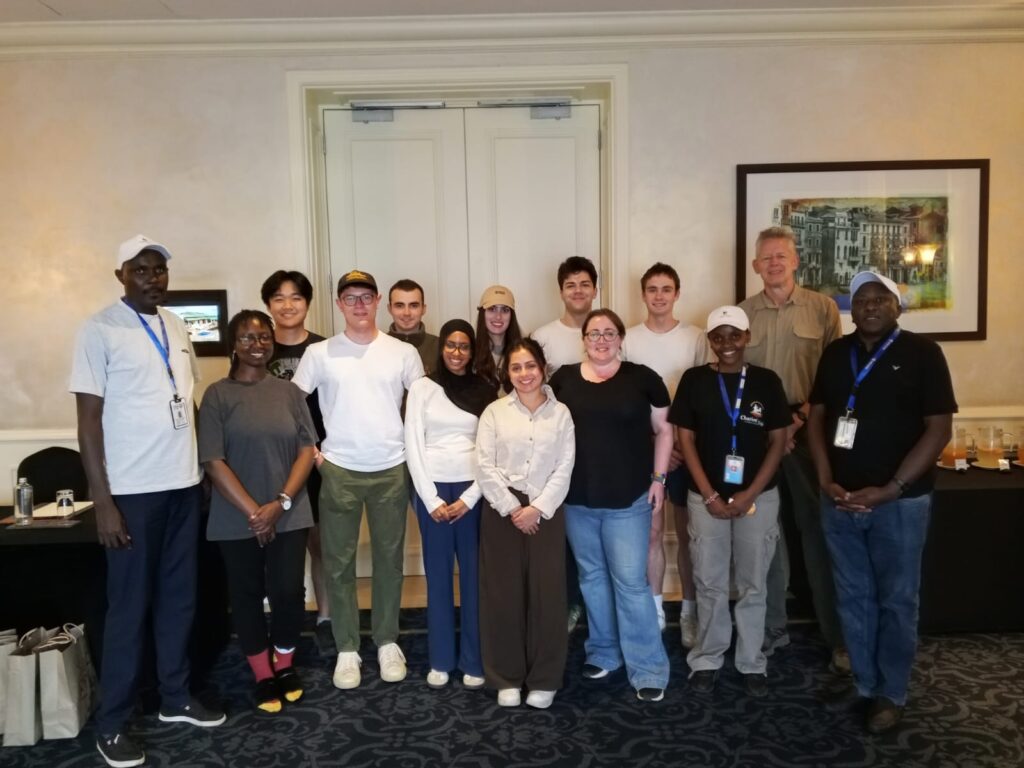
Chariot Safaris (Chariot of Fire Tours and Safari Ltd) had recently handled the ground logistics for a visiting Princeton University delegation in Nairobi; a sixteen-person group, a late-night international arrival, safari excursions, and a run of institutional meetings across the city. They’d done the job well, and they’d written it up in an internal report.
That report was genuinely impressive. It was also completely invisible. It lived in a document, in a folder, doing nothing for the business. No prospect would ever stumble across it, and even if you emailed it to one, an internal operations report isn’t built to persuade anyone.
The opportunity was obvious: this single project was exactly the kind of proof that wins more projects; specifically the high-value corporate and institutional clients Chariot wanted more of. The job was to turn it into something that actually pulls those clients in.
The thinking: a case study is a sales tool, not a story
The first decision shaped everything else. We weren’t writing a blog post about a nice trip. We were building a conversion asset; a page whose single job is to take a high-intent visitor and turn them into an inquiry.
That reframe changes how everything gets built. A story meanders; a sales tool moves toward one action. So we structured the page around a clear journey: open with proof, build confidence through the specifics, then offer one obvious next step.
We also made a deliberate call about tone. Chariot serves two very different audiences — leisure safari travellers who respond to warmth and a bit of personality, and corporate and executive clients who respond to polish, precision, and respect for their time. This page was aimed squarely at the second group. So the language stayed understated and confident, the design leaned premium rather than playful, and the whole thing was built to make a serious buyer think “these people are competent and discreet.”
The most powerful element on the page turned out to be the simplest: the hard logistics of the Princeton job, laid out plainly. Sixteen travellers. A 9:40 PM airside arrival. Four vehicles deployed. End-to-end coordination. For the audience that scrutinises this kind of detail, the numbers do the persuading — no adjectives required.
The conversion path: where does the reader actually go?
A beautiful page that ends in a dead end is a waste. So before we wrote a word, we mapped what happens after a reader is convinced.
For Chariot’s market, the answer was WhatsApp. It’s the default business channel in Kenya, it feels personal in a way a form doesn’t, and it lets a real person qualify a lead in conversation. So the page’s primary call to action — “Plan your transport” — opens a WhatsApp chat with a pre-filled message, and the team monitors that account daily so no inquiry sits unanswered.
That last detail matters more than any design choice. A perfect call-to-action that nobody answers over a weekend loses the client to whoever replied first. The conversion path isn’t just the button; it’s the promise behind it and the person on the other end.
The measurement: knowing whether any of this works
Here’s where many marketing efforts quietly fail. They publish something, it looks good, and nobody ever finds out whether it actually does anything.
We don’t work that way. We set the page up so its performance is measurable from day one. Every click on the “Plan your transport” button is now tracked, so Chariot can see — in plain numbers — how many people the page moves to take action. If the page converts, the data proves it. If it doesn’t, the data tells us what to fix. Either way, the decision-making is grounded in evidence rather than hope.
This is the difference between marketing as an expense and marketing as a system. A system has feedback. You learn, you adjust, you improve — and every project teaches you something about the next one.
The discoverability layer: making sure people find it
A conversion asset only converts people who reach it. So the final layer was making the page findable.
We optimised it properly for search — a clear, keyword-aligned title and description, a clean URL, and structured data that helps Google understand exactly what the page is and what Chariot does as a business. We also planned its place in the site’s navigation and the supporting links that point to it, because a page no one can find from the menu is just a link you have to remember to send.
None of this is glamorous, and none of it works in isolation. It’s the unglamorous, compounding layer that decides whether good content gets seen at all.
The system, not the task
Step back and the individual pieces matter less than the shape of the whole thing:
Find the buried proof. Every business has a best project sitting idle. The first move is recognising it.
Reframe it as a sales tool. Build toward one action, in the voice of the specific audience you want, with the most persuasive specifics up front.
Build the conversion path. Decide where the convinced reader goes, and make sure someone’s there to catch them.
Measure everything. A marketing asset you can’t measure is a guess. Track the action that matters so you know what’s working.
Make it findable. Search optimisation and smart internal linking are what turn a good page into a page that gets seen.
That’s the system. It’s repeatable, it compounds, and it turns the work a business has already done into the thing that wins its next clients.
Want this for your business?
You’ve almost certainly got a Princeton project of your own — a job you did well that nobody outside your company knows about. We turn those into assets that work for you around the clock.
If that sounds useful, let’s talk. We’ll start with the proof you already have, and build the system that puts it to work.
KaziBora Digital provides website management, content, and digital infrastructure for businesses across Kenya. This case study is published with the permission of Chariot of Fire Tours and Safari Ltd.